
why is spironolactone used for acne?
spironolactone is commonly prescribed off-label to treat hormonal acne in women. but how does a medication originally developed as a diuretic help improve breakouts? let's explore the science behind its mechanism, effectiveness, and important safety considerations.
the science behind clearer skin.
spironolactone is best known as a potassium-sparing diuretic used to treat conditions such as hypertension, heart failure, and fluid retention. however, it also has an important role in dermatology.
although spironolactone is not FDA-approved specifically for acne, dermatologists commonly prescribe it off-label for acne in adult women, particularly when hormonal influences contribute to breakouts.
its effectiveness comes from its antiandrogen activity, which helps reduce the effects of hormones that stimulate sebum (oil) production in the skin.
01 / what is spironolactone?
spironolactone is a potassium-sparing diuretic and mineralocorticoid receptor antagonist. it was originally developed to treat conditions involving fluid retention and aldosterone activity, including hypertension, heart failure, and certain cases of edema.
unlike many other diuretics, spironolactone helps the body eliminate sodium and water while reducing potassium excretion.
what makes this medication particularly interesting in dermatology is its additional antiandrogen activity.
androgens, including testosterone and dihydrotestosterone (DHT), influence sebaceous glands in the skin. these glands produce sebum, an oily substance that helps protect and lubricate the skin.
however, increased androgen signaling can contribute to excessive sebum production, clogged pores, and the development of acne.
spironolactone works partly by blocking androgen receptors, reducing the effects of androgens on sebaceous glands. this can help decrease oil production and improve acne over time.
02 / how does spironolactone treat acne?
to understand spironolactone's role in acne treatment, it helps to understand how hormones influence the skin.
androgens, such as testosterone and dihydrotestosterone (DHT), stimulate sebaceous glands to produce sebum. while sebum is essential for maintaining the skin barrier, excess production can contribute to clogged hair follicles and acne development.
spironolactone helps address this process through its antiandrogen effects.
blocking androgen receptors
spironolactone competes with androgens at their receptors, reducing androgen signaling within the skin. this can decrease sebum production and help prevent the formation of new acne lesions.
reducing hormonally influenced breakouts
because of its antiandrogen activity, spironolactone can be particularly useful for women experiencing persistent acne, including breakouts that worsen around menstruation.
improvement takes time
spironolactone does not work overnight. improvements may become noticeable after several weeks, but a meaningful response often takes approximately 3 months, with further improvement possible over 6 months.
unlike topical treatments that act directly on the skin's surface, oral spironolactone works systemically to reduce the hormonal stimulation contributing to acne.
03 / what does the clinical evidence show?
spironolactone has been used off-label for acne for decades, but more recent clinical trials have strengthened the evidence supporting its effectiveness.
the SAFA clinical trial (2023)
one of the most important studies evaluating spironolactone for acne was the SAFA trial, a randomized, double-blind, placebo-controlled study published in The BMJ in 2023.
the trial included 410 adult women with persistent facial acne. participants received either spironolactone or placebo in addition to their usual topical acne treatments.
the spironolactone group received 50 mg daily for the first six weeks, followed by 100 mg daily through week 24, if tolerated.
what did researchers find?
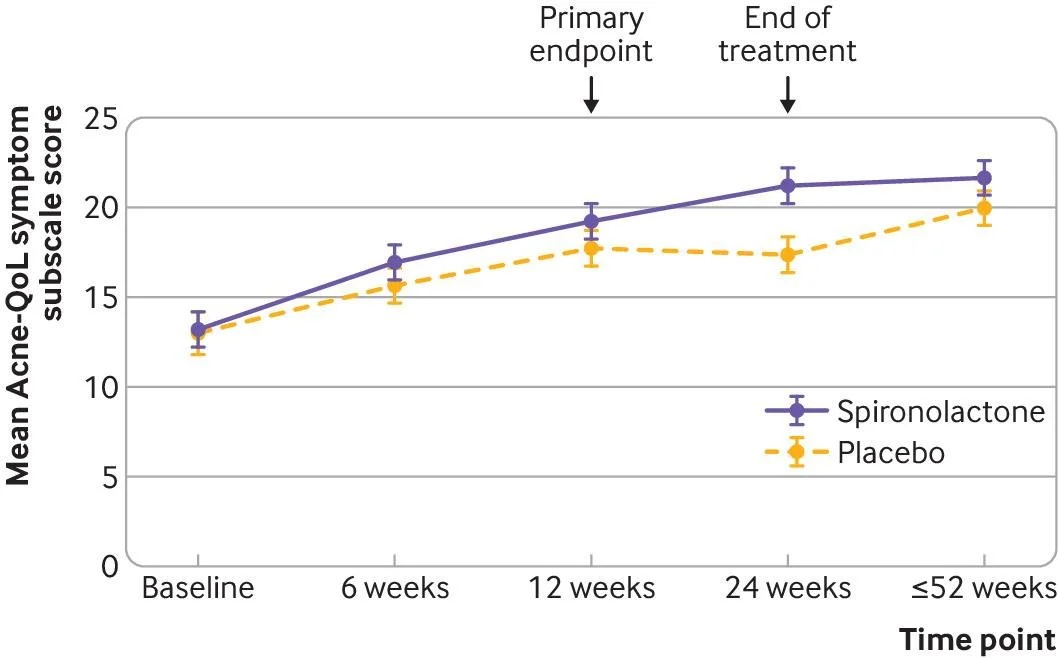
at 12 weeks, participants receiving spironolactone reported greater improvements in acne-related quality of life than those receiving placebo.
by 24 weeks, 82% of participants in the spironolactone group reported improvement in their acne, compared with 63% in the placebo group.
these findings suggest that spironolactone can be an effective treatment option for persistent acne in adult women, with benefits becoming more noticeable over time.
what do dermatology guidelines recommend?
the American Academy of Dermatology's 2024 acne guidelines conditionally recommend oral spironolactone for acne treatment.
a conditional recommendation means the treatment may be appropriate for selected patients, taking into account individual circumstances, potential benefits, and risks.
overall, current evidence supports spironolactone as a useful non-antibiotic treatment option for acne in women, particularly when long-term management is needed.
“the 2023 SAFA trial found that spironolactone improved acne-related quality of life compared with placebo, with benefits becoming more apparent by 24 weeks.”
04 / side effects & safety considerations
although spironolactone can be effective for treating acne, it is important to understand its potential adverse effects, contraindications, and monitoring considerations.
because spironolactone was originally developed as a potassium-sparing diuretic, its effects extend beyond the skin.
common side effects
some of the most commonly reported side effects include:
menstrual irregularities: spotting, irregular periods, or changes in menstrual cycle frequency.
breast tenderness: discomfort or sensitivity related to its hormonal effects.
dizziness: particularly when standing, due to its potential blood pressure-lowering effects.
increased urination: a result of its diuretic properties.
headaches: reported by some patients during treatment.
these effects are often manageable, but persistent or bothersome symptoms should be discussed with
“routine potassium monitoring is generally low-yield in otherwise healthy young women taking spironolactone for acne. patients with kidney disease, interacting medications, or other risk factors may require monitoring.”
05 / what to expect during treatment
spironolactone does not work overnight. unlike topical acne treatments that act directly on the skin, spironolactone targets hormonal signaling that contributes to excess oil production.
because of this, improvements in acne generally develop gradually over several weeks to months.
how is spironolactone dosed for acne?
for adult women with acne, spironolactone is commonly prescribed at doses ranging from 50 to 100 mg daily, although some patients may require lower or higher doses depending on their response and tolerability.
a healthcare provider may begin with a lower dose and gradually increase it to minimize potential adverse effects.
dosing is individualized based on acne severity, treatment response, medical history, and medication tolerability.
how long does it take to see results?
weeks 1–4: early treatment
during the first month, noticeable improvements may be limited. some patients may begin experiencing changes in oil production, but acne lesions may still occur.
weeks 6–12: gradual improvement
as androgen signaling is reduced, patients may begin noticing fewer inflammatory breakouts and improvements in overall acne severity.
months 3–6: more noticeable results
clinical improvement often becomes more apparent after approximately three months, with additional benefits possible over six months of continued treatment.
individual responses vary, and some patients may require adjustments to their treatment regimen.
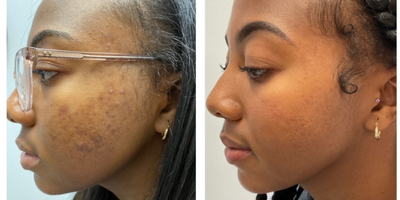
before-and-after acne treatment photos using spironolactone. Source: RealSelf. outcomes may vary.
does spironolactone permanently cure acne?
spironolactone helps control acne by reducing androgen-related activity in the skin, but it does not permanently eliminate the underlying hormonal influences.
acne may return after discontinuing treatment, particularly when hormonal factors continue to contribute to breakouts.
for this reason, some patients use spironolactone as a longer-term maintenance treatment under medical supervision.
can spironolactone be combined with other acne treatments?
yes. spironolactone is frequently prescribed alongside other acne therapies.
these may include:
topical retinoids: such as tretinoin or adapalene, which help prevent clogged pores.
benzoyl peroxide: which reduces acne-associated bacteria and inflammatory lesions.
azelaic acid: which may improve acne and post-inflammatory hyperpigmentation.
combined oral contraceptives: which may provide additional hormonal acne control for appropriate patients.
combination therapy allows healthcare providers to address multiple mechanisms involved in acne development.
the importance of consistency
because spironolactone works gradually, consistent use is important for evaluating its effectiveness.
patients should follow their prescribed regimen and discuss persistent side effects, pregnancy plans, or inadequate improvement with their healthcare provider rather than independently adjusting their dose.
the takeaway: spironolactone requires patience. while some patients notice improvement within the first few months, treatment response is typically evaluated over approximately 3–6 months.
06 / the bottom line.
spironolactone is an example of how a medication originally developed for one purpose can become a valuable treatment option in another area of medicine.
although initially used for conditions involving fluid retention and aldosterone activity, its antiandrogen properties have made it an established off-label option for treating acne in adult women.
clinical research, including the SAFA trial, supports its effectiveness, particularly with continued treatment over several months.
however, spironolactone is not appropriate for everyone. factors such as kidney function, potassium levels, pregnancy considerations, and potential medication interactions should be evaluated before treatment.
ultimately, effective acne management involves more than choosing a medication. it requires understanding the underlying causes of acne, setting realistic expectations, and developing an individualized treatment plan.
key takeaways
mechanism: spironolactone reduces androgen signaling, which can help decrease sebum production and acne breakouts.
effectiveness: clinical studies support its use for persistent acne in adult women.
timeline: noticeable improvements often develop over approximately 3–6 months.
safety: potassium-related risks, kidney function, medication interactions, and pregnancy considerations should be evaluated individually.
long-term management: spironolactone helps control acne, but breakouts may return after discontinuation.
the goal isn't simply clearer skin. it's understanding the science behind the treatments we use and making informed decisions about our health.
07 / references.
Layton AM, Eady EA, Whitehouse H, et al. Oral spironolactone for acne vulgaris in adult females (SAFA): a multicentre, double blind, randomised controlled trial. BMJ. 2023;381. https://doi.org/10.1136/bmj-2022-074349
Reynolds RV, Yeung H, Cheng CE, et al. Guidelines of care for the management of acne vulgaris. Journal of the American Academy of Dermatology. 2024;90(5):1006.e1–1006.e30. https://doi.org/10.1016/j.jaad.2023.12.017
Plovanich M, Weng QY, Mostaghimi A. Low usefulness of potassium monitoring among healthy young women taking spironolactone for acne. JAMA Dermatology. 2015;151(9):941–944. https://doi.org/10.1001/jamadermatol.2015.34
National Library of Medicine. DailyMed: Spironolactone prescribing information. https://dailymed.nlm.nih.gov/dailymed/search.cfm?query=spironolactone
RealSelf. Spironolactone for Acne: Before and After Photos. RealSelf. Accessed November 14, 2026. https://www.realself.com/photos/spironolactone-for-acne?photo=11313442
educational disclaimer.
this article was created by a pharmacy student for educational and informational purposes only. it does not constitute personalized medical advice, diagnosis, or treatment. always consult a licensed healthcare professional before starting, stopping, or changing any medication.